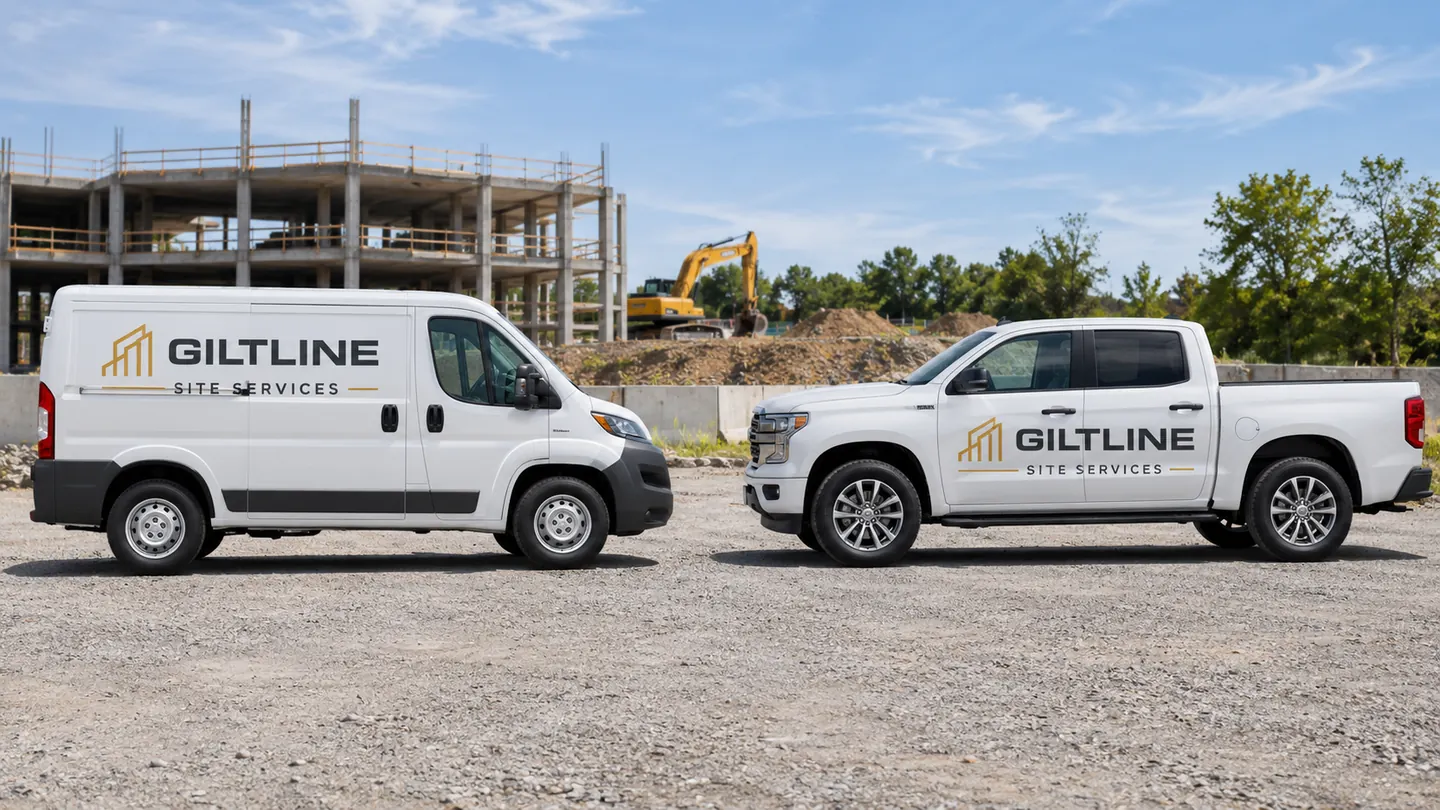
Record the installed reference
At completion, save the unit identifier, artwork revision, wording version and the placements that were delivered. Add current photographs showing the lettering on the actual body. Keep the production file reference supplied by the shop if available, along with the exact material information recorded for the job. These details support a future conversation; they do not guarantee that a newly produced piece will be indistinguishable from graphics that have already been in service.
- Name the affected side and panel rather than requesting a generic duplicate.
- Retain any final size information confirmed in the approved record.
Describe the reason for replacement
Separate collision repair, normal condition changes and a business wording update. Photograph the entire view as well as the affected area. State what happened to the underlying panel and whether it was repainted or replaced. Ask the shop what assessment is needed before new material is applied. A replacement request should identify uncertainties rather than promise the surface or surrounding graphics are unchanged.
- Provide the repair date and known coating information when available.
- Flag whether the current master wording differs from the installed version.
Close the register after the work
Record which pieces were actually replaced and the artwork version used. Preserve the previous version as history and update the current unit record. If only some vehicles receive a new phone number or division name, keep the remaining units visible in an update list. Share applicable care guidance with the people cleaning or maintaining the fleet. A complete record makes the next individual repair easier without implying that every future replacement needs the same scope.
- Attach completion photos to the affected unit, not a general fleet folder.
- Record any accepted differences or future update actions.
Keep a working record
Before you approve the next step
- Installed version recorded for each unit.
- Affected placement identified.
- Overview and detail photos supplied.
- Panel repair history disclosed.
- Old versus current wording reviewed.
- Replacement outcome added to the register.
Use the free planning tool to organize the details you can confirm and the questions still open.
Four questions before the next step
Should a replacement always use the newest company wording?
That is a business decision to make explicitly. Consider the current fleet standard, the intended update plan and the affected unit. Tell the supplier which version is authorized rather than letting the file name decide.
Read the detailed guide: Keep a replacement register for fleet lettering
Can a photo alone establish an exact replacement?
It is helpful evidence, but source files, measurements and material references may still be needed. Ask what the shop can verify and what requires inspection before approving the replacement.
Read the detailed guide: Keep a replacement register for fleet lettering
Should the wording master include final letter sizes?
Record proposed sizing separately and have it checked against the actual vehicle and artwork. Text approval confirms what the lettering says, not whether its physical dimensions or placement are suitable.
Read the detailed guide: Create a fleet lettering wording master
How do we handle a new phone number midway through an order?
Issue a clear revision, identify affected vehicles and ask what has already been produced or installed. Agree the resulting scope before treating the entire fleet as updated.
Read the detailed guide: Create a fleet lettering wording master
Original technical sources
Use the linked publisher's current instructions for the exact product and vehicle. This planning guide does not replace its application, safety or warranty requirements.